

This year at Summer Game Fest, I got to play Stars Reach, an MMORPG published and developed by Playable Worlds, Inc. The MMORPG genre is a mainstay of PC gaming, adapting various IPs across the decades, like Star Wars, The Lord of the Rings, The Elder Scrolls, Final Fantasy and more. Lately it’s even begun spinning off into MMO-lite titles like Destiny, the Division, and others that borrow certain aspects of gameplay and apply them to a different genre.
Unfortunately, the genre seems to have stagnated, with newer games lacking lasting power and some older games struggling to remain relevant and offer new, exciting content. I only spent thirty minutes playing Stars Reach, but what I saw had me very excited for the future of the genre.
Their goal is to create a living universe where players play a key part in shaping worlds, down to the cultivation of the land, harvesting resources, and building technology and cities. While I’m skeptical of the proposed technology behind the game, what I saw feels like the next big step in cultivating a virtual life in online gaming.
Stars Reach does just enough to pique excitement for the genre.
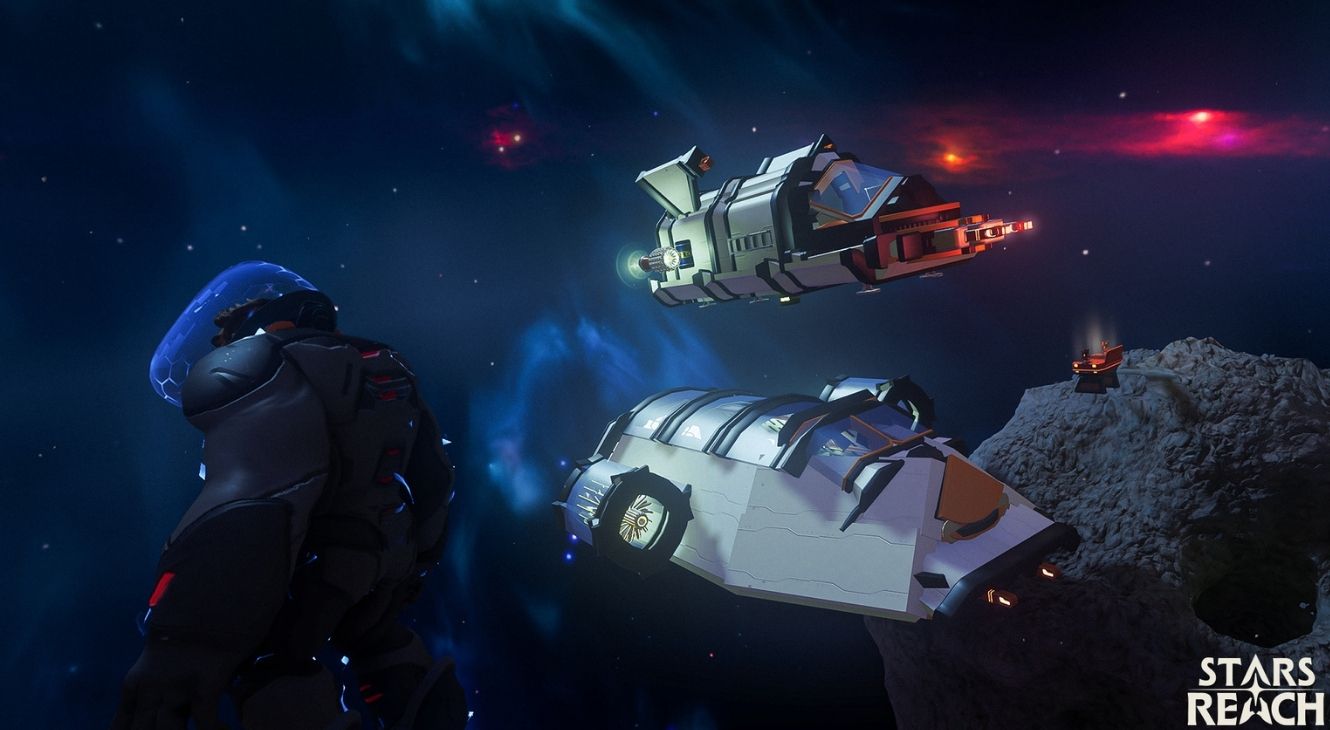
I started the Stars Reach demo on a rudimentary space station, floating in the void of space with a few asteroids and other objects surrounding the platform. Flying over to the nearest asteroid, which featured its own gravity, I was able to use a mining tool to excavate the asteroid, which crumbled beneath the tool. I was warned not to dig too deep or recklessly, lest I fall into the center of the asteroid’s gravity field, making escape difficult if not impossible.
The developer explained that the destruction on the asteroid was being simulated across all player instances, so the damage I caused was persistent. Shortly after, he led me to a portal floating near the space station, which warped me to the surface of a nearby planet.
On this planet, I was led down a stone pathway to a series of landmarks where I could test the various tools I was given. One tool allowed me to excavate the dirt or rock, filter out any useful resources, and separate the dirt into a separate container. If it filled up, I could dump out the loose dirt, which would scatter across the land or flow down a slope, as you might expect. Once again, the developer assured me that simulations would dictate how exactly the mini-landslide would behave, allowing players to take advantage of physics to discard unwanted resources or items.
Players can take advantage of physics to better n avigate surroundings but also get rid of items.
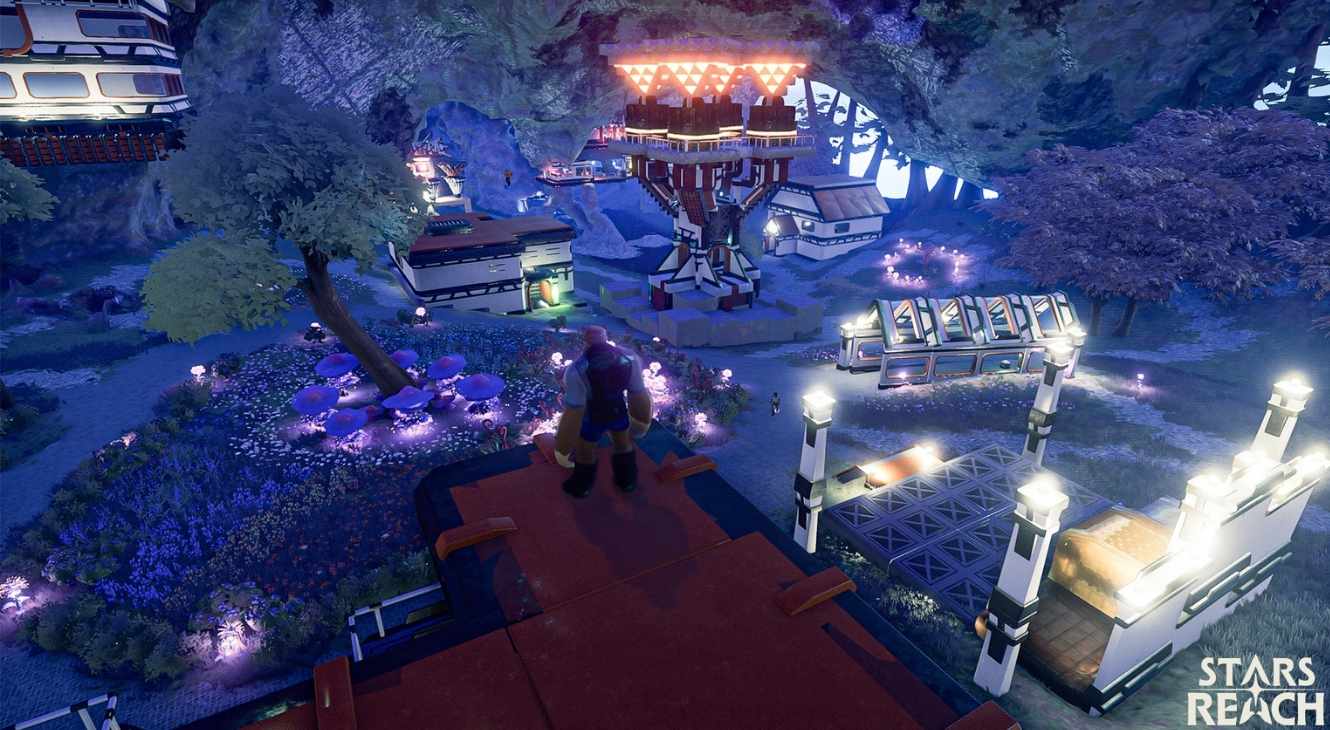
These simulations came in handy when I was instructed to use a heating tool on a stone hill. The stone became super-heated until it melted into lava, which then flowed downhill. Another tool I possessed worked well to put out fires started by myself, or other players, or hostile creatures, and it worked just as well to cool the lava into rock. The developer let me know that although this action seemed useless, it’s possible to use this process to turn stone into igneous rock, such as pumice or obsidian, which could then be harvested and used for other crafting purposes.
Additionally, planets’ differing geological makeup means that some resources would appear in high quality on some planets, with especially high-quality resources potentially triggering a ‘gold rush’-type event within Stars Reach.
Miners or other resource harvesters would descend on the planet to mine the planet for all its worth, selling or crafting the material into premium-quality weapons, which in turn allows combat-focused players to clear new planets of hostile life with increasing efficiency. Each role players can take is intended to help others, allowing them to find their niche within Stars Reach and contribute to the greater good.
Taking a look at the skill tree, it’s easy to see just how players are intended to find their niche. Each activity can be improved once you learn certain skills; for instance, certain Ranger skills allow players to find and activate beacons to create map data. They can then sell this map data, with each person using their map contributing to leveling the skill further.
Not all resources are made equal, with geology playing a factor in quality of resources mined.
Other skills down the tree make them or their maps better, either by increasing the amount of time their map data is valid, making it easier to find and activate beacons, and more. The chef’s role is similar, with their skill improving the more people eat their food.
One role that particularly surprised me was the journalist, who could report on goings on in the universe. In current MMORPGs, we see plenty of content creators who cultivate a following by reporting on in-game events, breaking down the latest patches, or showing players where to find lesser-known goodies. Stars Reach takes this a step further by allowing players in-game to visit a journalist’s blog, receive relevant news directly from players who dedicate themselves to informing the public, and gain experience in the journalist skill.
Leveling this skill can grant access to in-game cameras, allowing players to record footage for use in their reports, with additional levels granting access to chyrons and other tools to make their presentations look more professional. Once again, this role gives and takes from others; a journalist may not want to risk going to a dangerous planet, but if a miner or ranger finds something juicy, they can sell that information to a journalist.
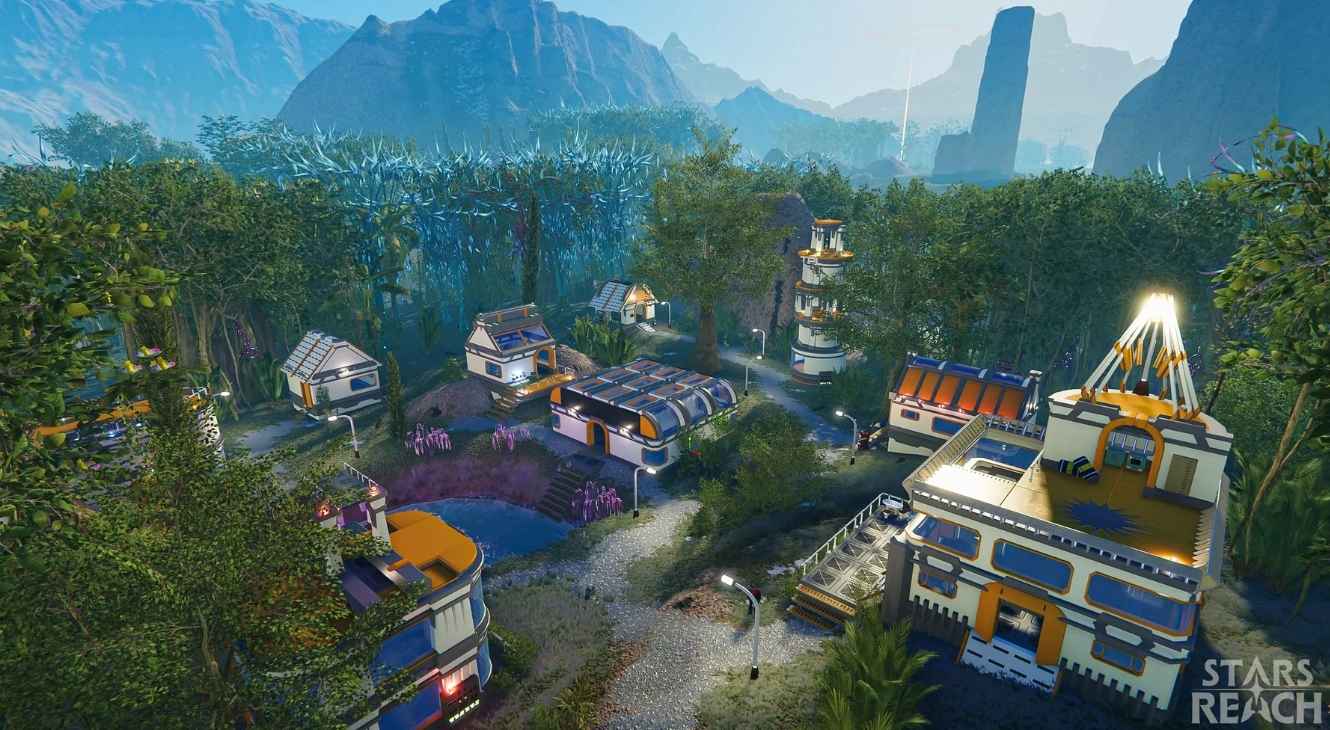
If you want to set up shop and lay claim to a planet, you have to prove you’re a people person first. The leadership skill doesn’t come naturally, so players will have to revive fallen players to begin the journey to eventually starting Stars Reach’s equivalent of a guild. Players in MMORPGs interact with the world and each other in a variety of ways, and Stars Reach seems intent on ensuring that everyone finds the role that suits them.
Everyone has their part to play, and how Stars Reach handles skills will allow players to experiment.
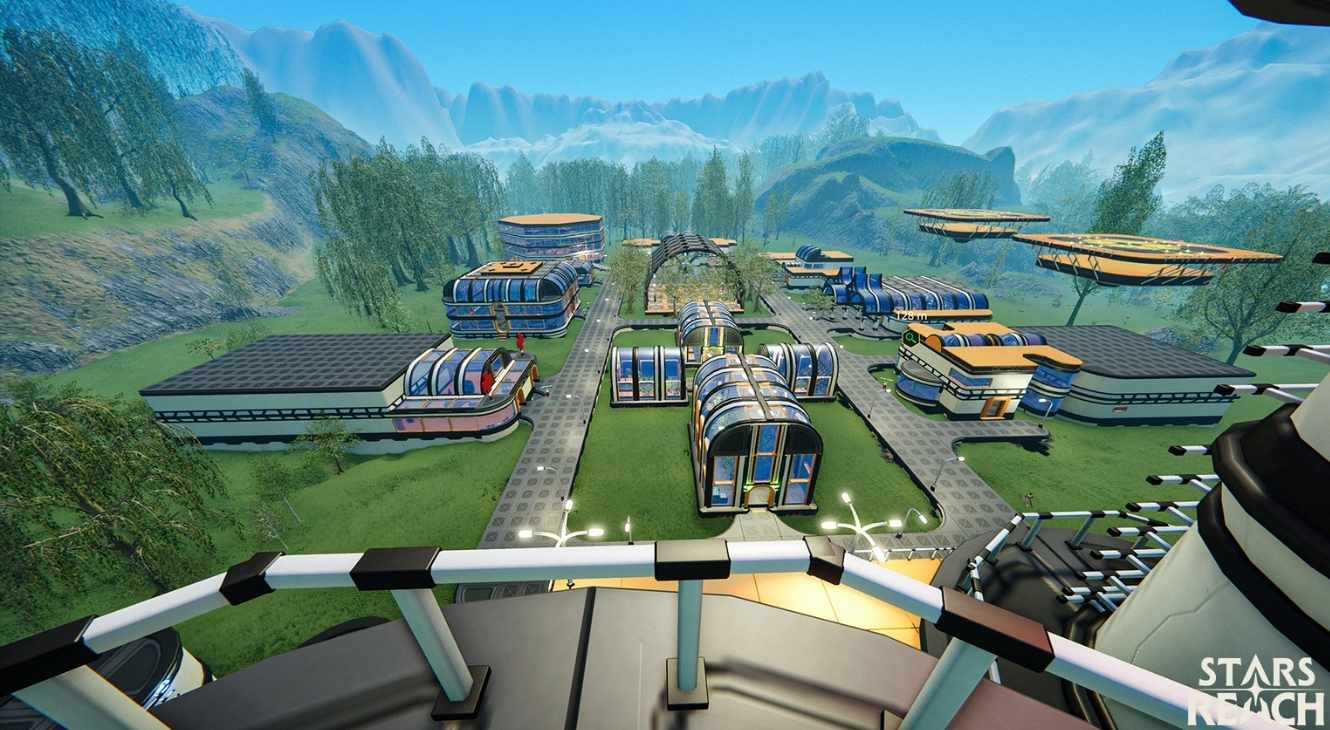
Stars Reach wants players to experiment with their role in the universe, but that doesn’t mean new players are totally out of luck when they jump into the world. Players who have been around do have access to more skills, but players cannot be a master of all. A skill cap means that, while players are able to learn or develop all of their skills, only a select number can be active at any given time.
There is even a real-time waiting period when switching skills to ensure players aren’t simply switching between skills to circumvent this limit. This gives players the opportunity to experiment and try new things, but once they decide what they want, they can commit to it fully.
As planets dwindle in resources and traffic, the wormholes maintaining their connection to the universe weaken, eventually closing. This allows new planets full of resources and unexplored frontiers to constantly rotate into the playable space. Together with a player base that can define their playstyle and roles through the expansive skill tree, Stars Reach feels like it might be a giant leap for MMORPGs.
Stars Reach will enter Early Access on Steam Summer 2026.